
Industrial Y Strainer | High-Performance Pipeline Filtration Solutions
Industrial Y Strainers protect pumps, control valves, meters, and steam traps from pipeline debris by mechanically filtering solid particles through a perforated or wire-mesh screening element. Installed in horizontal or vertical pipelines with the leg pointing downward, these units maintain continuous flow while trapping sediment in the internal pocket for routine blow-down or manual extraction.
-
![DIN Y Strainer]() DIN Y StrainerOur DIN Y Strainer is designed and manufactured strictly according to DIN standards, ensuring stable and reliable product quality. This product can be installed upstream of pressure reducing...
-
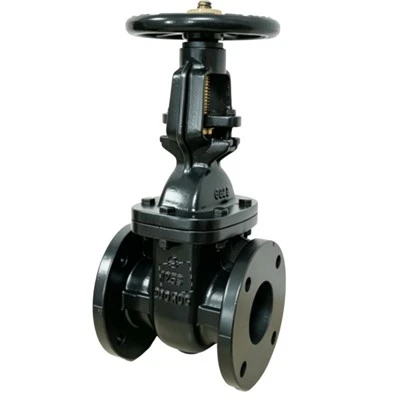
![ANSI Y Strainer]() ANSI Y StrainerOur ANSI Y Strainer is engineered and produced following full ANSI specifications for seamless matching with ANSI standard piping and dependable sealing performance.
Solid rugged... -
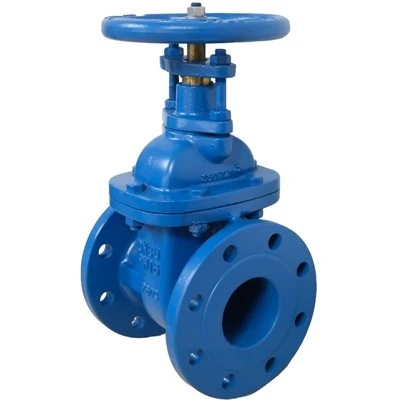
![BS4504 PN16 Y Strainer]() BS4504 PN16 Y StrainerOur BS4504 PN16 Y Strainer protects piping systems by efficiently removing solid particles and impurities, preventing them from entering downstream equipment.
It is widely used in...


Key Features
Optimized Flow Geometry:
Angled branch design minimizes flow turbulence and reduces permanent pressure drop across the filtering element.
Reinforced Screen Integrity:
Heavy-gauge perforated metal core or mesh-lined baskets resist high differential pressure without media migration or deformation.
Precision Machined Seating:
Lapped body-cover joint with spiral-wound gaskets ensures bubble-tight sealing under thermal cycling.
Integrated Drain Port:
NPT or socket weld drain connection allows inline blow-down cleaning without full system shutdown.
Technical Specifications
|
Parameter |
Specification |
|
Size Range |
NPS 1/2–24 (DN 15–DN 600) |
|
Pressure Ratings |
ASME Class 150–2500; PN 16–PN 250 |
|
End Connections |
Raised Face (RF), Ring-Type Joint (RTJ), Butt-Weld (BW), Female NPT |
|
Screen Specifications |
20–400 mesh; standard perforation 1.5–3.2 mm; custom wedge wire available |
|
Design Standards |
ASME B16.34, ASME B16.5, API 6D, EN 1092-1 |

Bolt-Cover Design: Accessible bolted bonnet configuration for secure disassembly and screen maintenance without unbolting the complete pipeline spool.
Self-Aligning Screen Seats: Machined internal guide ribs lock the filtration basket in true alignment to prevent fluid bypass or vibration fatigue.
Drain Plug/Valve Provision: Supplied with a solid threaded plug or optional ball valve for localized sediment evacuation.
Materials
Body & Cover:
Carbon Steel:
ASTM A216 WCB, ASTM A350 LF2 (Low Temp)
01
Stainless Steel:
ASTM A351 CF8, CF8M, CF3M
02
Alloy & Duplex:
ASTM A890 4A / 2205, Monel, Inconel
03
Screen Mesh:
SS304, SS316, Titanium, Monel
04
Gasket:
304/Graphite Spiral Wound, PTFE, Soft Iron (RTJ)
05
Performance & Selection Considerations
Pressure Drop Calculation:
Monitor the clean-to-dirty pressure differential ($\Delta P$). Initial clean pressure drop should not exceed 0.05 bar at operating velocity.
Flow Orientation:
Ensure proper directional arrow casting alignment. Vertical installations require downward flow through the pocket leg.
Viscosity Limits:
Standard screen sizing is rated for fluids up to 500 cSt; higher viscosities require customized open-area ratios.
Applications
Petrochemical Refineries:
Feedwater and hydrocarbon process lines guarding upstream control valves.
Desalination Plants:
Seawater intake protection utilizing Super Duplex and Nickel-Aluminium Bronze materials.
Power Generation:
Boiler feedwater and high-pressure steam distribution systems.
HVAC Chilled Water Loops:
Large-diameter commercial circulation systems protecting plate heat exchangers.
Raw Material Verification: Positive Material Identification (PMI) testing on all pressure-retaining castings and forgings.
Casting Integrity: 100% radiographic (RT) and magnetic particle (MT) examination available per ASME Section VIII standards.
Pressure Testing: Shell and seat hydro-testing conducted at 1.5x design pressure in accordance with API 598.

OEM / Customization
Custom Face-to-Face Dimensions: Retrofit configurations matching existing piping layouts.
Specialized Coatings:
FBE (Fusion Bonded Epoxy), PTFE lining, and marine-grade epoxy paint systems.
Instrumentation Ports:
Factory-drilled and tapped differential pressure gauge tappings across the inlet and outlet chambers.
Our Certificate


Why Choose Valtone
Metallurgical Traceability: Complete EN 10204 3.1 material test certificates provided for every pressure boundary component.
In-House Machining: CNC vertical turning centers and multi-axis boring machines maintain strict dimensional tolerances on flange faces and internal seat pockets.
Global Project Experience: Verified manufacturing pedigree supplying standardized and customized filtration assemblies to international EPC contractors and fluid control distributors.
FAQ
As one of the most professional y strainer manufacturers and suppliers in China, we have world-leading production equipment and strong manufacturing capabilities. Please rest assured to buy bulk durable y strainer for sale here from our factory. We also accept customized orders.