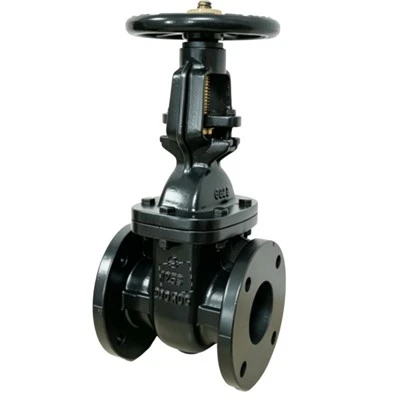
1. When an angle-type globe valve is opened, the flow rate reaches its maximum-indicating the fully open position-once the disc lift reaches 25% to 30% of the nominal diameter. Therefore, the fully open position of the globe valve is determined by the travel of the disc.
2. Globe valves for liquefied gas are categorized by stem thread position (external or internal thread) and by medium flow direction (straight-through, Y-pattern/straight-flow, or angle-type). Based on the sealing method, they are classified as either packed-seal or bellows-seal globe valves.
3. Installation and maintenance of angle-type globe valves: Bellows-seal globe valves operated by handwheels or handles can be installed at any position on the pipeline.
4. Handwheels, handles, and actuating mechanisms must not be used for lifting purposes.
5. The direction of medium flow must align with the arrow indicated on the valve body.
6. High-temperature, high-pressure globe valves (also known as stop valves) are the most widely used type of valve. Their popularity stems from several factors: low friction between sealing surfaces during opening and closing, durability, low lift requirements, ease of manufacturing and maintenance, and suitability for a wide range of pressures (from low/medium to high). Their closing principle relies on stem pressure to press the disc's sealing surface tightly against the seat's sealing surface, thereby blocking the flow of the medium.
7. Jacketed (thermal insulation) globe valves allow flow in only one direction and have specific installation orientation requirements. Compared to gate valves, they have a greater face-to-face length and higher fluid resistance; additionally, their sealing reliability may diminish during long-term operation.